
3D Printed Couples Statues: Making Plastic not look like Plastic
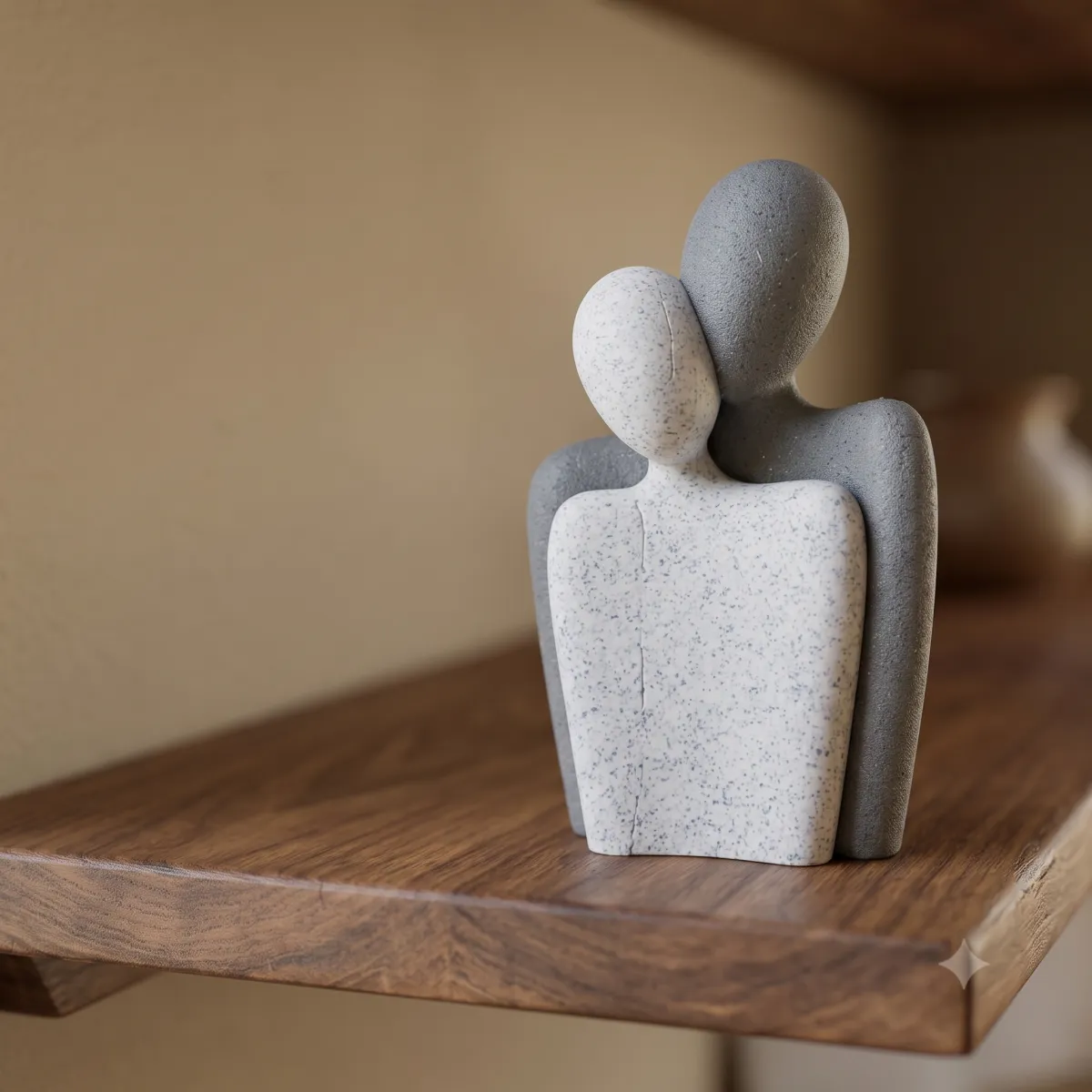
There is a massive misconception about 3D printing. The internet makes it look like a magical microwave—you put a digital file in, press a button, and a perfect model pops out.
The reality involves clogged nozzles, bed adhesion failures, and hours staring at the first layer to make sure it doesn't turn into a chaotic ball of plastic spaghetti. But even when the machine is running perfectly, the real challenge is making the final product feel premium. Nobody wants a gift that feels like a cheap, hollow plastic toy.
Achieving that premium feel requires diving deep into the slicer software to trick the human hand.
Engineering the Weight
First, I had to deal with the weight. Standard 3D prints are mostly air inside, built with thin shells. To fix this, I significantly increased the wall thickness and dialed up the internal infill. This makes the statues substantially heavier, giving them a high-quality, solid weight in the hand.
But making them heavy was only half the battle. They also had to feel real.
The Texture: Overriding the Plastic
To break the illusion of plastic, I play around with a highly specific slicer setting known as "fuzzy walls." By instructing the printer nozzle to intentionally vibrate by microscopic fractions of a millimetre as it prints the outer shell, I can completely alter the final texture.
I use this setting to mimic the raw materials the statues are supposedly made of:
- Concrete & Wood: For these finishes, the fuzzy walls setting creates a beautifully rough, organic, textured surface that mimics raw stone and timber.
- Ivory & Marble: For these classic finishes, the setting is disabled, allowing the machine to lay down micro-smooth layers that feel polished to the touch, as if they have been painstakingly hewn and sanded by hand.
Precision Tolerances
Finally, there’s the assembly. The statues are printed in distinct, interlocking pieces. Because I am using advanced texture settings and heavy infills, the printer's dimensional accuracy has to be perfect.
If the pieces are off by even 0.2mm—about the thickness of two sheets of paper—they either won't fit together at all, or they will be so loose they rattle. I spent days printing, tweaking the flow rate, adjusting the cooling fans, and printing again until the friction fit was absolutely flawless.
It takes a lot longer to tune and slice them this way, but holding a solid, beautifully textured statue makes every single hour of calibration worth it.